ServicesWalkways and Sidewalks
Walkways and Sidewalks in Long Beach
We remove worn or lifted paths and pour new concrete walkways and sidewalks that drain away from your home, sit level with the steps and driveway, and keep good traction when wet. You get a plain answer on cause, options and cost before any work starts.
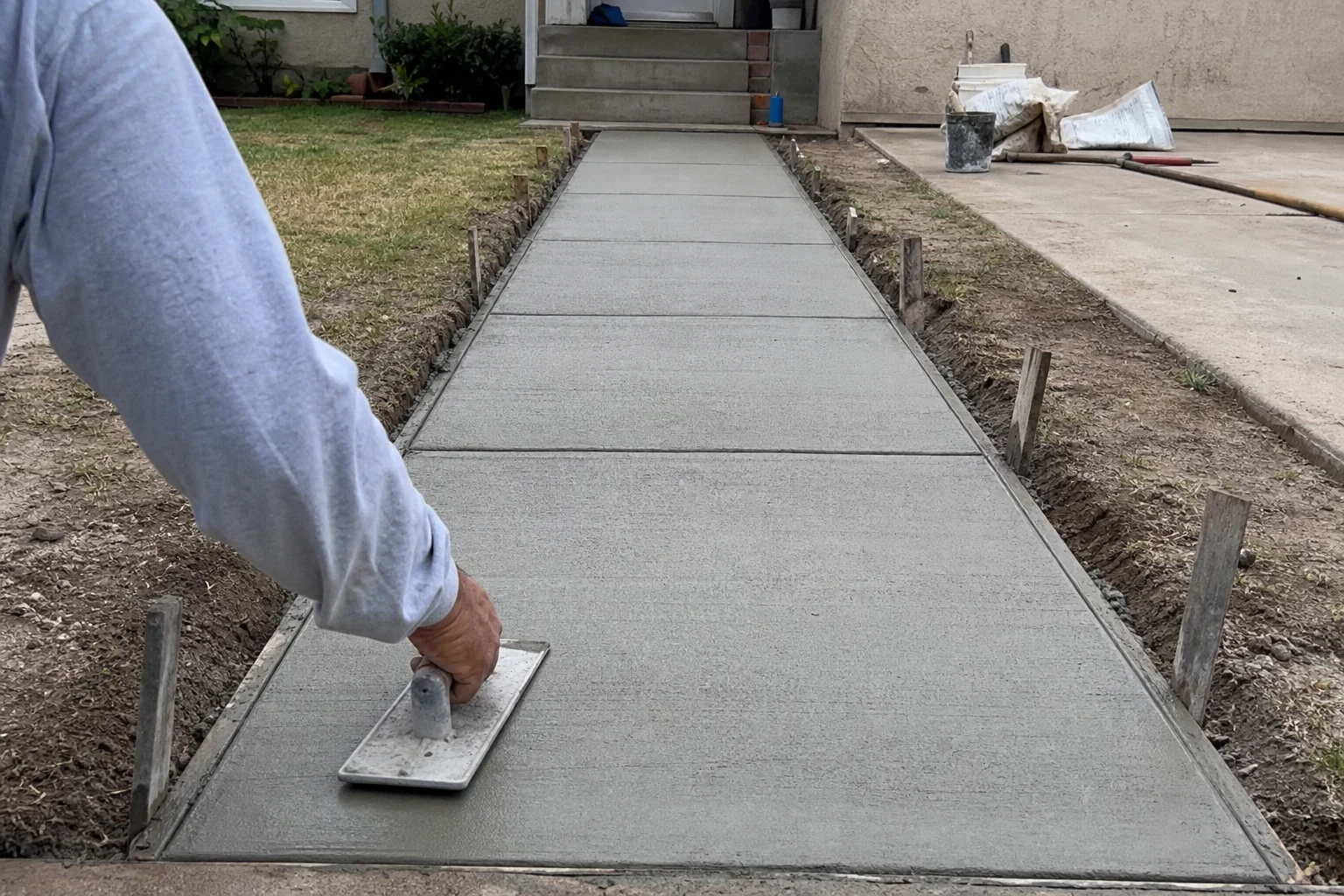
A path that stays flat, dry and easy to walk
A walkway is a narrow slab, and narrow slabs show every shortcut. A soft base, missing joints or no slope can turn a new path into a trip hazard or a puddle within a few seasons. We build ours on compacted base, set a gentle cross-slope so water runs off, and cut control joints where the concrete wants to crack anyway.
Most of our walkway work is a full tear-out and replacement: the front path to the door, a side path to the gate, or the stretch of sidewalk in front of your home. If a section has lifted from a tree root or sunk at a joint, we tell you why it happened and what the new pour needs to do differently. We have been in business 15+ years, and that is usually the first thing we explain on a site visit.
What a new walkway includes
- Demolition and haul-off
- We saw-cut the edges, break out the old concrete and take it away. Where it meets a driveway or porch, a clean cut keeps the joint tidy.
- Base preparation
- We dig to firm soil, add base rock and compact it in lifts. On clay-heavy ground this step matters more than the concrete itself.
- Forms, slope and reinforcement
- Forms are set to a measured cross-slope so rain drains toward the yard, not the foundation. We add rebar or wire where roots, soil or width call for it.
- Root and drainage planning
- If a tree caused the old lift, we talk through root barriers, a wider path line or a different route. We would rather solve the cause than pour over it.
- Finish and edges
- A light broom finish gives grip in wet weather. Smooth tooled edges, a colored mix or a stamped border are options, and our Stamped Concrete page shows more.
- Joints, cure and cleanup
- Control joints are tooled or saw-cut at even spacing. We leave the site swept and tell you when it can take foot traffic.
Signs it is time for a new walkway
Lifted edges you catch with a toe
Even a half-inch lip at a joint trips people. When roots or soil have pushed slabs out of line, replacing the section is the lasting fix.
Water pooling after rain
Puddles mean the path has settled flat or tipped back toward the house. Standing water also leaves slick algae and stains.
Cracks that keep widening
Hairline cracks are normal. Cracks you can fit a coin into, or ones that shift height, point to a failed base underneath.
Crumbling surface
Flaking or a rough, sandy top usually comes from a weak mix or poor finishing years ago, and it only gets worse.
A path that no longer fits
Too narrow for two people, a poor route to the gate, or a layout that sends guests across the lawn. A new pour lets you fix the shape.
What moves the price of a walkway
Length and width set the starting point, but the ground under the path often matters as much as the concrete on top. We price after seeing the site, and the estimate shows each part so you can compare options.
Removal and access
Thick old slabs, a narrow side yard or a long carry to the street add labor. Open access with room for a small loader keeps it lower.
Soil, roots and base depth
Soft or clay soil needs more base rock. Root barriers or rerouting around a tree add time and material.
Finish and color
A broom finish is the simplest. Integral color, exposed aggregate or stamped patterns cost more for material and finishing time.
Permits and tie-ins
Public sidewalk work needs a city permit and inspection. Matching steps, a driveway apron or porch edges adds forming detail.
How the work goes
- 1
Phone call and site visit
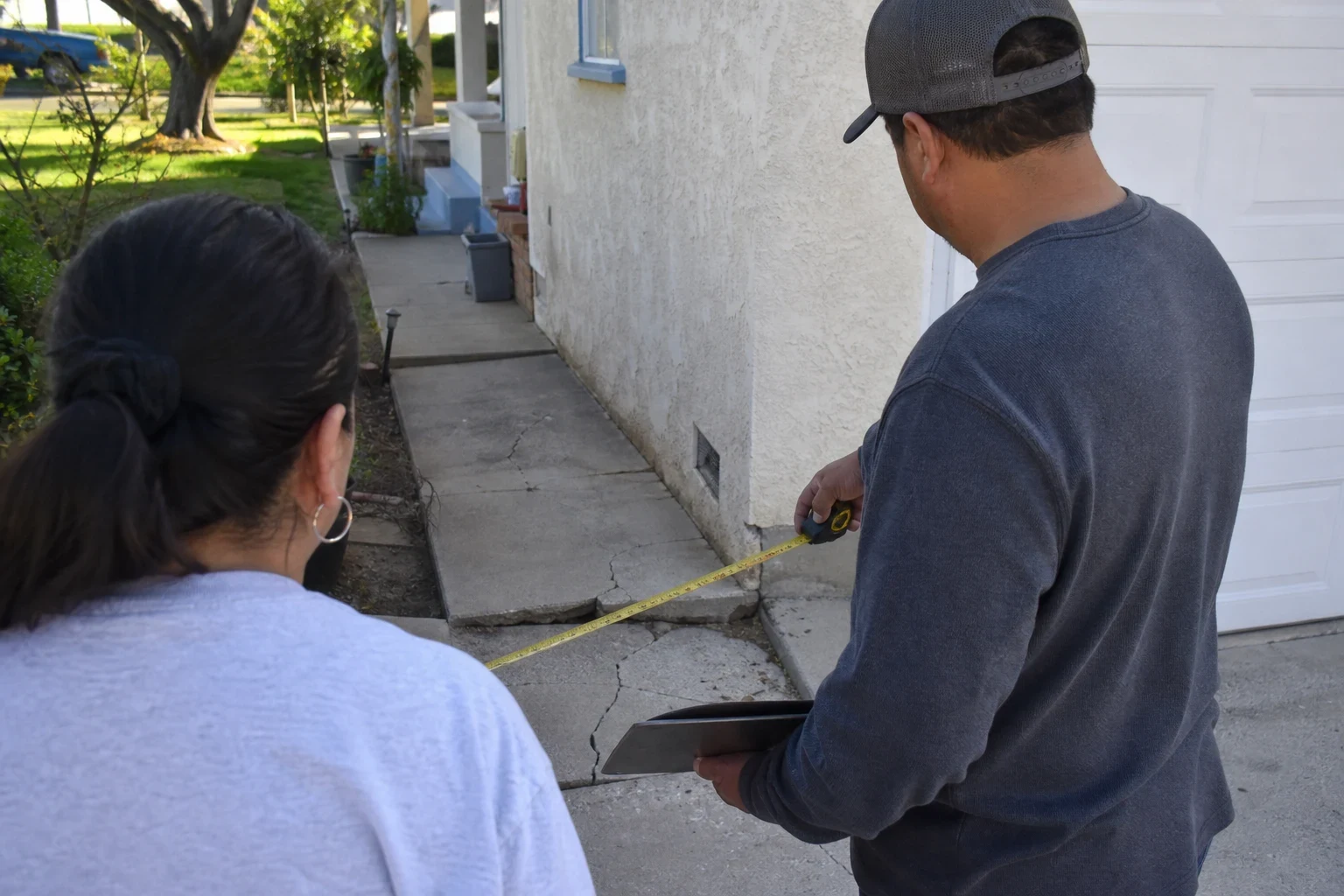
You describe the path by phone and we set a time to look. We measure, check the slope and soil, and look for roots and buried lines.
- 2
Written estimate
You get the scope line by line: removal, base, reinforcement, finish and any permit. If part of the work is optional, we say so.
- 3
Demo and prep day
Old concrete comes out, base goes in and gets compacted, and forms are set. For sidewalk in the public right-of-way, we pull the city permit and schedule the inspection.
- 4
Pour and finish
Most walkways are poured and finished in one day. We tool the edges, broom the surface and mark the joints while the concrete is still workable.
- 5
Cure and walk-through
Light foot traffic is usually fine after a day or two. We walk the path with you and go over care and our 1-year warranty.
Walkway and sidewalk questions
Who is responsible for the sidewalk in front of my house?
In many cities, including much of the Long Beach area, the property owner is responsible for the sidewalk along the street, though rules vary by city and by the cause of the damage. Check with your city first. If the work is yours to do, we handle the permit and build to the city's standard.
How thick should a walkway be?
Four inches is typical for foot traffic. Where a path crosses a driveway or might see a cart or small vehicle, we go thicker and add steel. We will tell you which applies to your layout.
Can you stop tree roots from lifting the new path?
Nothing stops roots completely, but a root barrier, a reinforced slab or a slight reroute slows the problem a great deal. We look at the tree and explain the tradeoffs before you decide. We do not cut major roots without telling you the risk to the tree.
How soon can we walk on it?
Usually after 24 to 48 hours for normal foot traffic. Concrete keeps gaining strength for weeks, so we ask you to keep heavy loads like wheelbarrows off a little longer.
What credentials and coverage come with the work?
Our company is licensed by the California State License Board (CSLB), and each walkway we pour comes with a 1-year warranty. The written estimate spells out exactly what is included, so you know what is covered before we start.
Ready to replace that walkway?
Tell us about the path and what bothers you about it. We will come look, explain the cause and lay out your options in writing.