ServicesGarage Floors
Concrete Garage Floors in Long Beach
A garage floor carries the weight of your car every day, takes oil drips and tire scuffs, and gets the hardest wear on your home. We remove the old slab, rebuild the base and pour a new floor finished smooth, with an honest answer about cost.
When a new garage floor is the right call
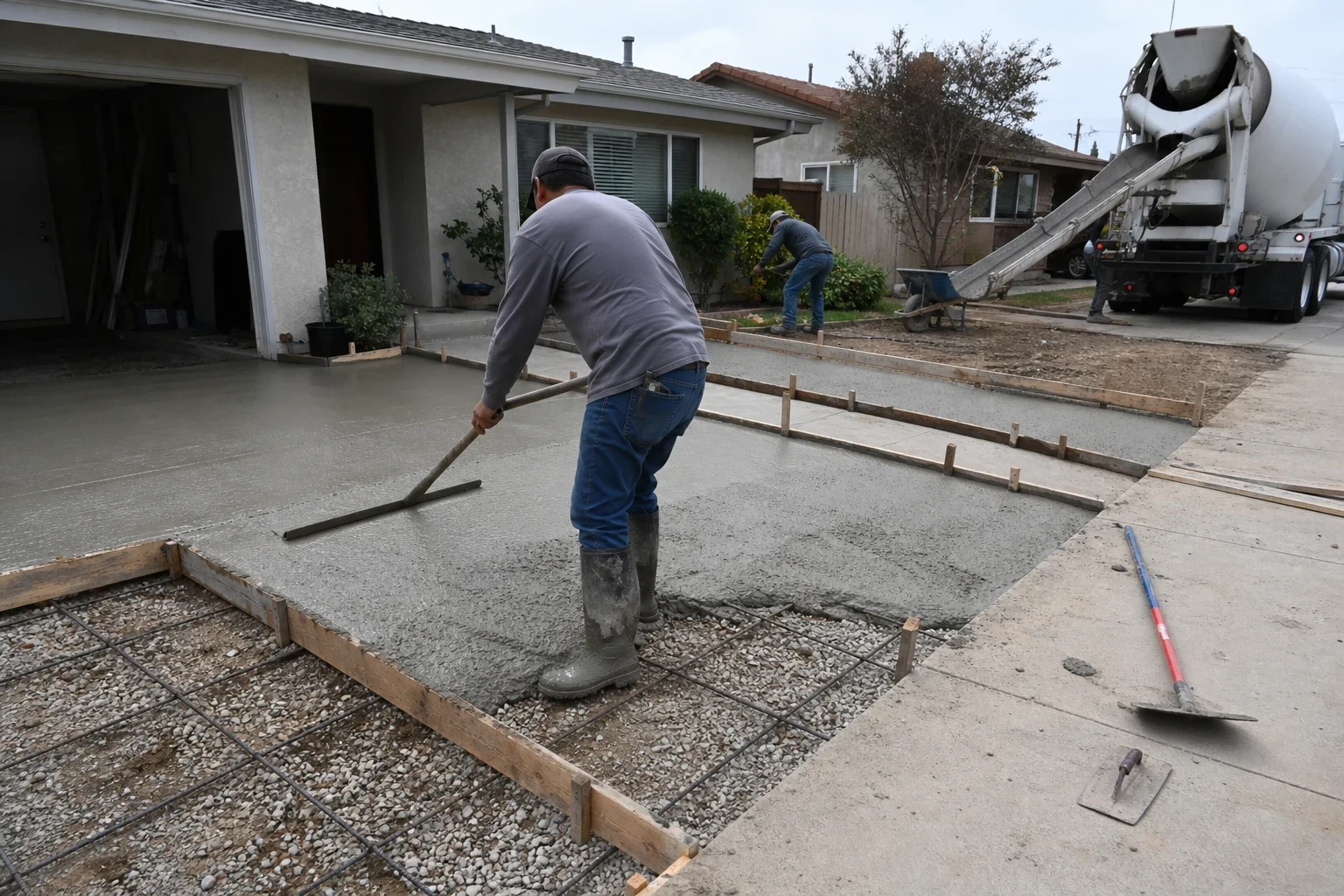
A new garage floor makes sense when the slab under your car is broken into pieces, has sunk at one end, or tilts water toward the house instead of out the door. At that point patching would only hide the cause. Replacement lets us fix what is underneath: a soft or poorly compacted base, a slab poured too thin, or missing reinforcement.
Many garages around Long Beach sit on slabs poured decades ago, often thinner than what we pour today and with no steel inside. We tell you plainly what we see, why it failed and what a new floor involves. If your slab is sound and you only want a different finish, we will say so too.
We have been pouring concrete for 15+ years and hold a license from the California State License Board (CSLB). That experience shows up in the parts you never see once the floor is down.
What the work includes
- 01
Tear-out and haul-away
We break up the old slab, load it out and haul it away. You are left with clean, open ground ready for a proper base.
- 02
Base preparation
We grade and compact the soil, then add and compact base rock. A firm, even base is what keeps a new floor from settling under a parked car.
- 03
Reinforcement and thickness
We set rebar on supports so it sits inside the slab rather than at the bottom. Thickness is chosen for the vehicles you park, with extra attention at the apron where tires roll on.
- 04
Slope toward the door
The floor is formed with a gentle pitch toward the garage door so rinse water and rain drain out, not toward your walls or the house entry.
- 05
Steel-troweled finish
Garage floors get a dense, smooth troweled surface that sweeps clean and resists dusting. If you prefer more grip near the door, we can broom that strip.
- 06
Control joints and cleanup
We cut joints in planned places so the concrete has somewhere to crack neatly as it shrinks. Then we clear forms and debris and leave the space swept.
Questions about Garage Floors?
Call(562) 784-5653Signs your garage floor needs replacing
Wide or shifting cracks
Hairline cracks are normal. Cracks you can fit a coin into, or where one side sits higher than the other, point to a base that has moved.
A sunken section
A low corner or a dip where water pools usually means the soil below has settled or washed out.
Water runs the wrong way
If hosing out the garage sends water toward the back wall or the door into your home, the slope is wrong and new concrete is the clean fix.
Flaking or powdery surface
A surface that crumbles, pits or leaves gray dust on your shoes was often overworked or poorly cured when it was poured.
Deep oil saturation
Years of drips can soak well into old concrete. Cleaners help on the surface, but a heavily stained, softened slab is often better replaced.
How the job runs
- 1
Look and measure
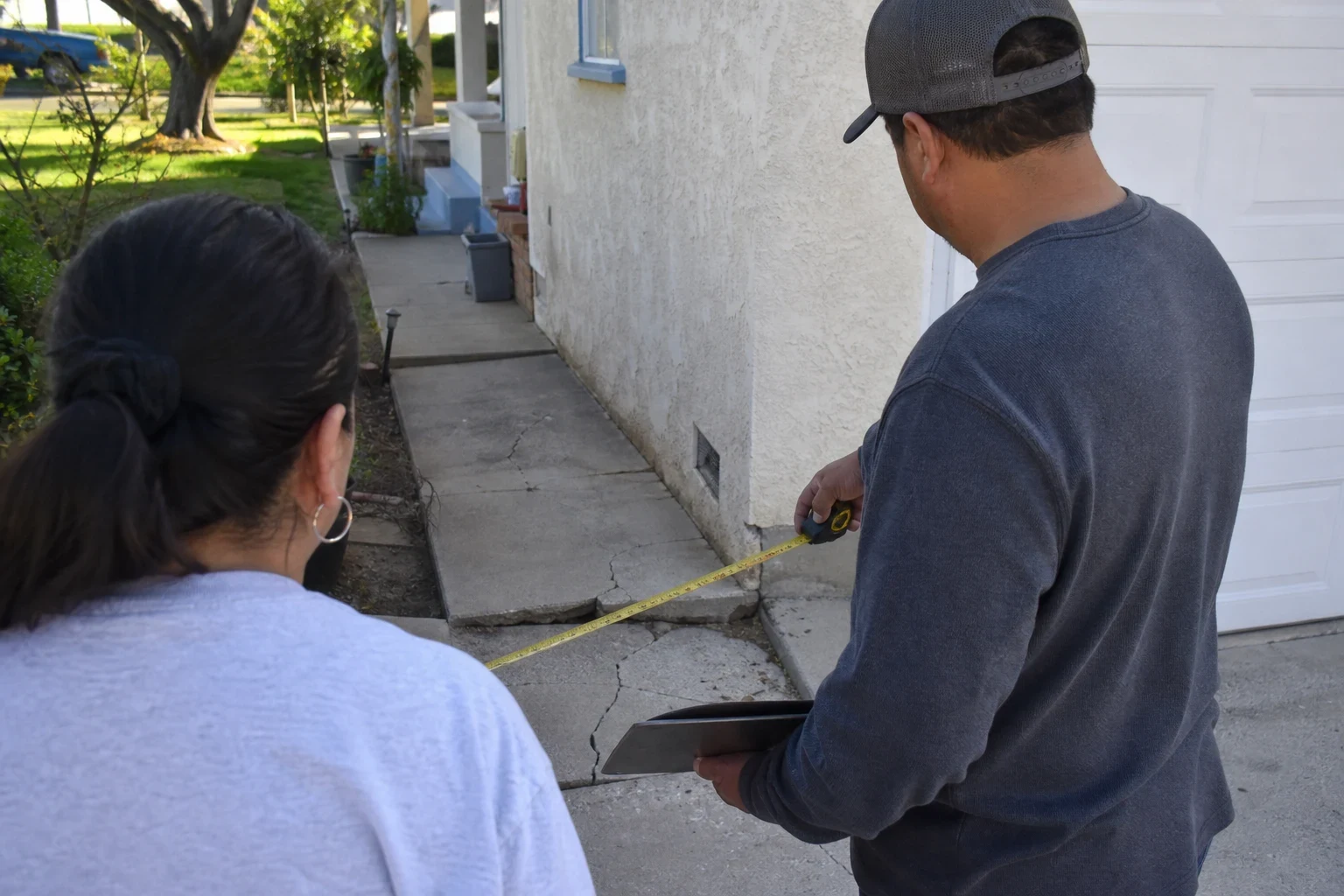
We walk the garage with you, measure, check the slope and look at how the slab has failed. You hear the cause and your options before any numbers.
- 2
Written quote
We put the scope in writing: tear-out, base, reinforcement, thickness and finish. If the job needs a permit, we pull it and schedule any inspection.
- 3
Demolition and base
Usually a day for breaking out, hauling and compacting. Please clear the garage beforehand; we protect the walls and door track while we work.
- 4
Pour and finish
We place the concrete, screed it to grade and trowel it smooth. Joints are cut once it can take the saw without raveling.
- 5
Curing and first use
You can walk on it after a day or two. We ask you to keep cars off for about a week so the slab gains strength before it takes a load.
What moves the cost
The size of the garage matters, but it is rarely the whole story. Most of the difference between two quotes comes from what has to come out, what goes under the new slab and how easily we can get concrete to it. We explain each of these on the quote.
- Removing the old slab
- Thick slabs, hidden steel or a second layer poured over an older floor take longer to break and add disposal weight.
- Access to the garage
- A garage at the front of the lot is simple. A detached garage at the back of a narrow drive may need a pump or wheelbarrow runs.
- Soil and base condition
- Soft, wet or clay-heavy soil may need to be dug out and replaced with compacted rock before we pour.
- Thickness and reinforcement
- Heavier trucks or a workshop with heavy equipment call for a thicker slab and more steel.
- Finish and sealer
- A plain troweled floor costs less than one with a penetrating sealer or a broomed apron strip added.
Garage floor questions
Can you pour a new floor over my old one?
Sometimes, but we rarely recommend it in a garage. An overlay raises the floor at the door and the house entry, and it carries the old slab's problems with it. Tearing out and rebuilding the base gives you a floor that lasts.
How long until I can park in the garage?
Plan on about a week before driving on it. Foot traffic is fine after a day or two. Concrete keeps gaining strength for weeks, so avoid heavy jacks or stands on fresh joints early on.
Will the new floor crack?
Concrete shrinks as it cures, so small cracks are possible. We cut control joints so they form in straight, planned lines, and a compacted base with rebar keeps the slab from breaking apart or sinking.
Do I need a permit for a garage floor?
It depends on the scope of the work. If yours needs one, we pull it and handle the inspection as part of the job.
Is the work covered after you finish?
Yes. Our garage floors come with a 1-year warranty, and we go over what it covers before you sign.
Ready for a floor you can park on for years
Tell us how your garage floor is behaving and what you park on it. We will explain what is likely causing it and what replacement involves.