ServicesRV Parking Pads
Concrete RV Parking Pads in Long Beach
An RV pad carries far more weight than a driveway, and it carries it in one spot for months at a time. We build pads with a deeper base, a thicker reinforced slab and a gentle slope to drain, sized to the rig you actually own.
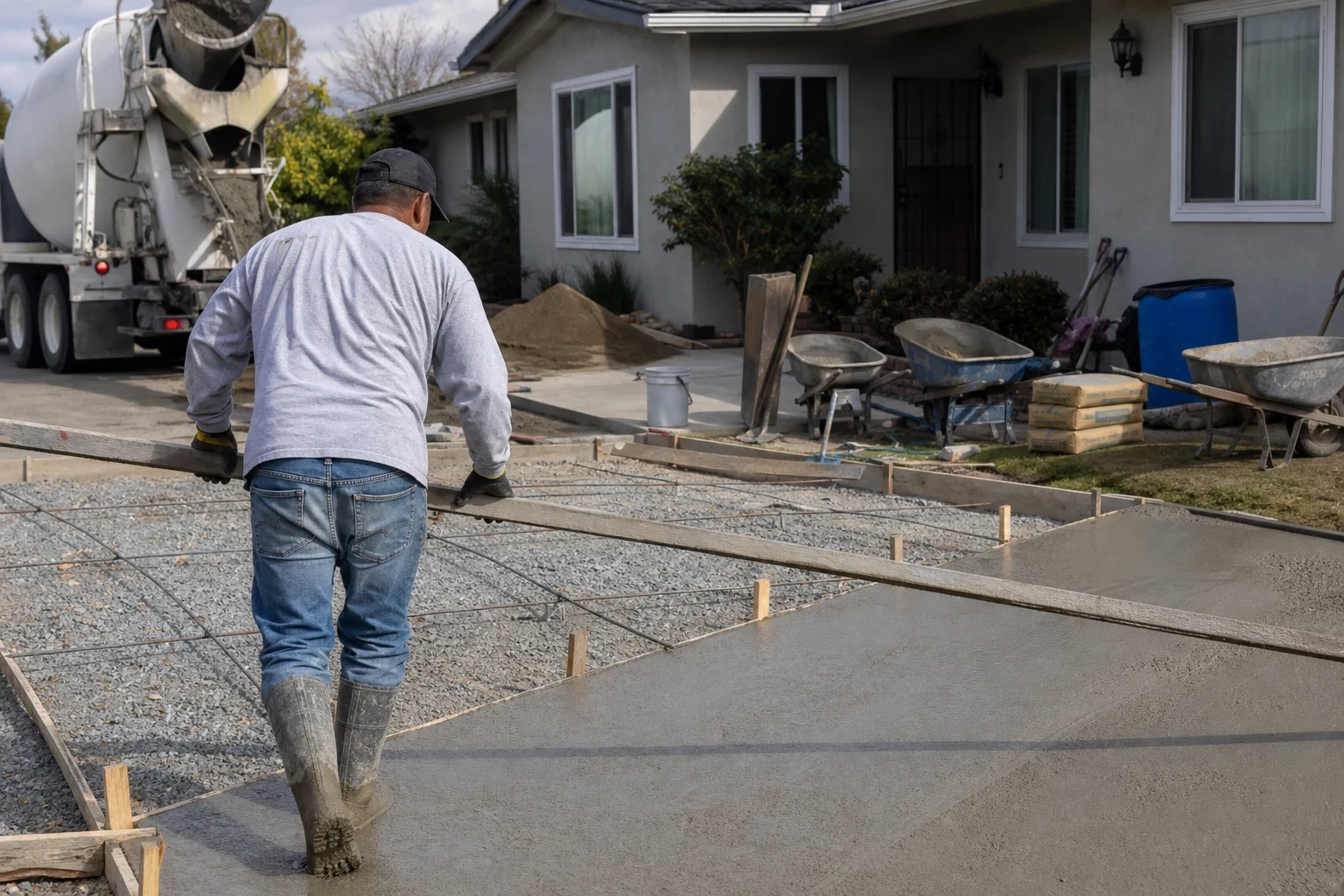
What an RV Pad Is, and When It Makes Sense
A concrete RV parking pad is a dedicated slab for a motorhome, travel trailer, boat or toy hauler. It replaces gravel, lawn or a thin driveway extension that was never meant to hold several tons parked in the same place. Gravel ruts and migrates. Grass dies and turns to mud in the wet months. A standard 4-inch slab can crack under tires and leveling jacks.
The right pad is thicker, reinforced and built on a compacted base. We usually plan for a heavier section than a typical driveway, with steel throughout and a stronger mix where the load calls for it. The goal is simple: you back in, set your jacks and never think about the ground again.
We have been pouring slabs like this for 15+ years, and we are licensed by the California State License Board (CSLB). If you are weighing an RV pad against widening your existing driveway, we will give you a straight answer on which one holds up better for your rig.
What the Work Includes
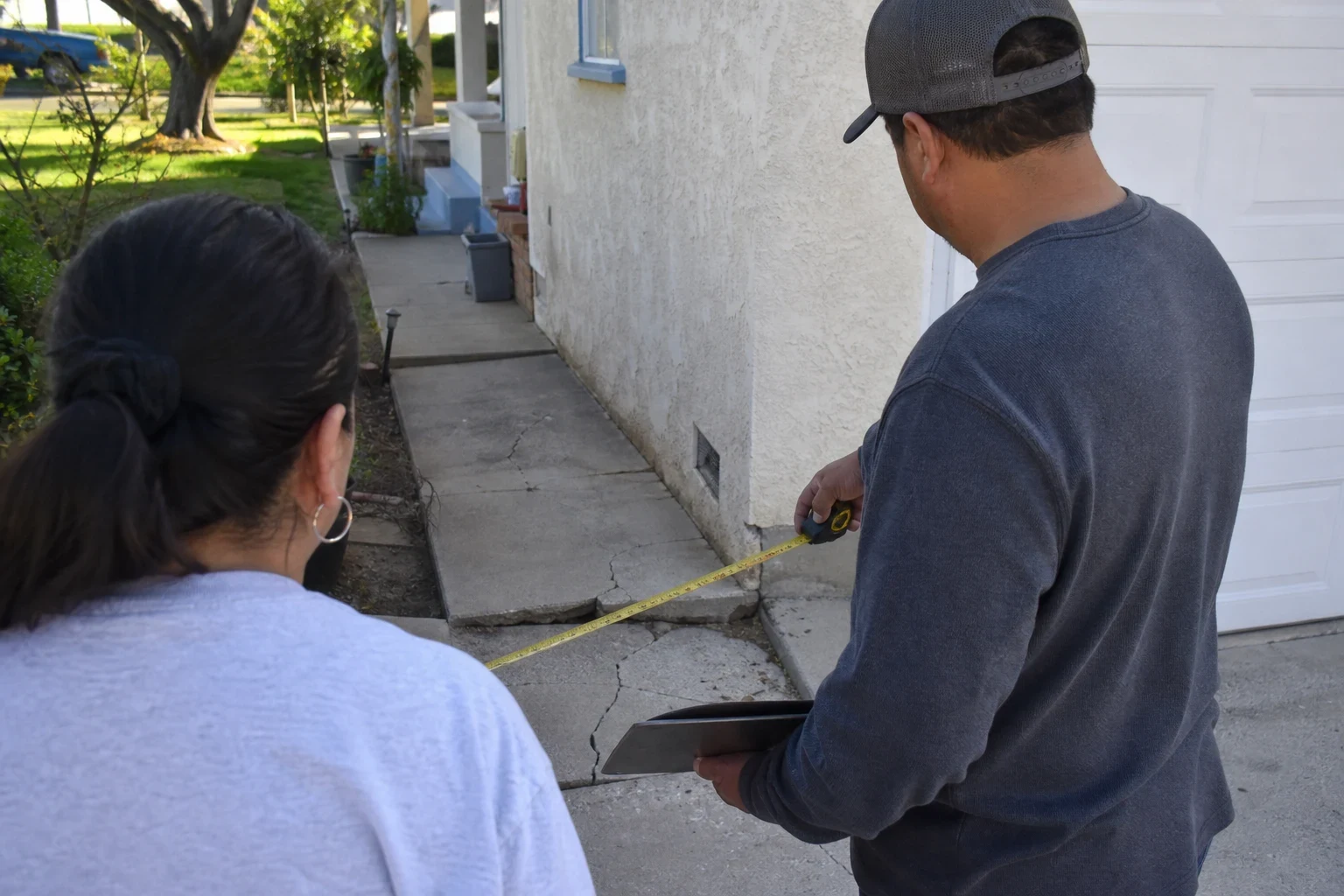
Measuring for your rig
We size the pad to your RV's length, width and slide-outs, plus room to walk around it and open compartments. Turning radius from the street or gate matters as much as the parking footprint.
Excavation and compacted base
We dig out soft soil and roots, then place and compact a crushed aggregate base. A firm base is what keeps a heavy slab from settling or cracking at the corners.
Rebar and a thicker slab
Steel reinforcement is set on supports so it sits inside the concrete, not on the dirt. The slab is poured thicker than a standard driveway to carry tire and jack loads.
Drainage and slope
The surface is pitched slightly so water runs away from your home and off the pad. Standing water under an RV invites rust, mildew and slick footing.
Control joints and finish
Joints are cut at planned spacing so any shrinkage cracks follow a straight line. We finish with a broom texture for traction, or match the look of your existing driveway or a stamped concrete border.
Cleanup and a written warranty
Forms, spoils and washout are hauled away when we are done. The work is backed by our 1-year warranty.
Signs It Is Time for a Proper RV Pad
- Ruts in gravel or lawn
- If your tires leave grooves or the trailer leans after a rain, the ground is moving under the weight.
- Cracks where you park
- Fresh cracks or sunken spots on a driveway that holds your RV mean the slab is too thin for the load.
- Jacks sinking or wobbling
- Leveling jacks that push into the ground or need boards stacked under them every time point to a soft surface.
- Mud and tracked-in dirt
- In the rainy months, a soft parking spot turns into mud that ends up inside the coach and your home.
- A new or larger rig
- Moving up to a longer motorhome or a heavier fifth wheel is the right moment to build for that weight from the start.
How an RV Pad Job Runs
- 1
Phone conversation and site visit
We talk through your rig, where it will park and how it gets there. Then we look at access, soil, gate width and how water moves across your yard.
- 2
Written estimate and permits
You get a line-item estimate covering base, thickness, reinforcement, finish and any approach work. If the job touches the curb, sidewalk or street, we explain what the city requires and handle the permit.
- 3
Excavation, base and forms
Day one is usually digging, compacting the base and setting forms and steel. We protect your landscaping and keep the work area tidy.
- 4
Pour and finish
The concrete is placed, leveled, floated and given a broom finish. Joints are cut at the right time so the slab cracks where we intend, if it cracks at all.
- 5
Curing and first parking
You can walk on the pad within a day or two. We will tell you when it is ready for the RV, usually after about a week, since concrete keeps gaining strength for roughly a month.
What Moves the Cost of an RV Pad
Price comes down to how much concrete and steel the pad needs and how hard it is to get there. We break each of these out on the estimate so you can see where the money goes. If there is a way to trim cost without weakening the slab, we will say so.
- Size and thickness
- A longer, wider or thicker pad uses more concrete and more rebar. Sizing to your actual rig keeps you from paying for slab you do not need.
- Site prep and soil
- Removing old concrete, roots or soft fill adds labor. Clay soils, common around Long Beach, may need a deeper base to stay stable.
- Access for trucks
- A clear path for the mixer is simplest. Tight side yards or long distances from the street can mean a pump or extra handling.
- Approach and permits
- Widening a curb cut or rebuilding a section of sidewalk involves city rules and extra work beyond the pad itself.
- Finish and extras
- A plain broom finish costs less than color or a stamped border. Added drainage or an electrical conduit run for hookups also changes the scope.
RV Pad Questions We Hear Most
- How thick should a concrete RV pad be?
- Thicker than a standard driveway, with rebar throughout. The exact section depends on your rig's weight and your soil. We size it during the site visit and put the thickness in writing on the estimate.
- Do I need a permit for an RV pad?
- Many pads on private property are straightforward, but work in the public right-of-way, like a new or wider curb cut, usually needs city approval. Some neighborhoods and HOAs also have rules about where an RV can park. We will tell you what applies before any work starts.
- Can you extend my existing driveway instead?
- Sometimes. If the existing slab is thin or already cracked where the RV would sit, tying into it just moves the problem. We will look at it and give you an honest answer on extending versus building a separate pad.
- How long before I can park the RV on it?
- Plan on about a week before parking a heavy rig, longer in cool, damp weather. Foot traffic is fine after a day or two.
- Will the concrete crack under my leveling jacks?
- Jacks put a lot of weight on a small area. A thick, reinforced slab on a compacted base handles it well, and jack pads spread the load further. We also place control joints away from where your jacks will land.
- Is the work covered by a warranty?
- Yes. Our RV pads come with a 1-year warranty, and we walk you through what it covers before the job begins.
Ready to Park on Solid Ground
Tell us what you drive and where it needs to go. We will explain the base, thickness and cost drivers plainly and set up a time to see the site.