ServicesConcrete Slabs
Concrete Slabs in Long Beach
We pour concrete slabs for sheds, hot tubs, AC units and outdoor storage at your home. Each one is sized for its load, set on compacted base and sloped so water runs away from the house. You get a clear answer on cost before any digging starts.
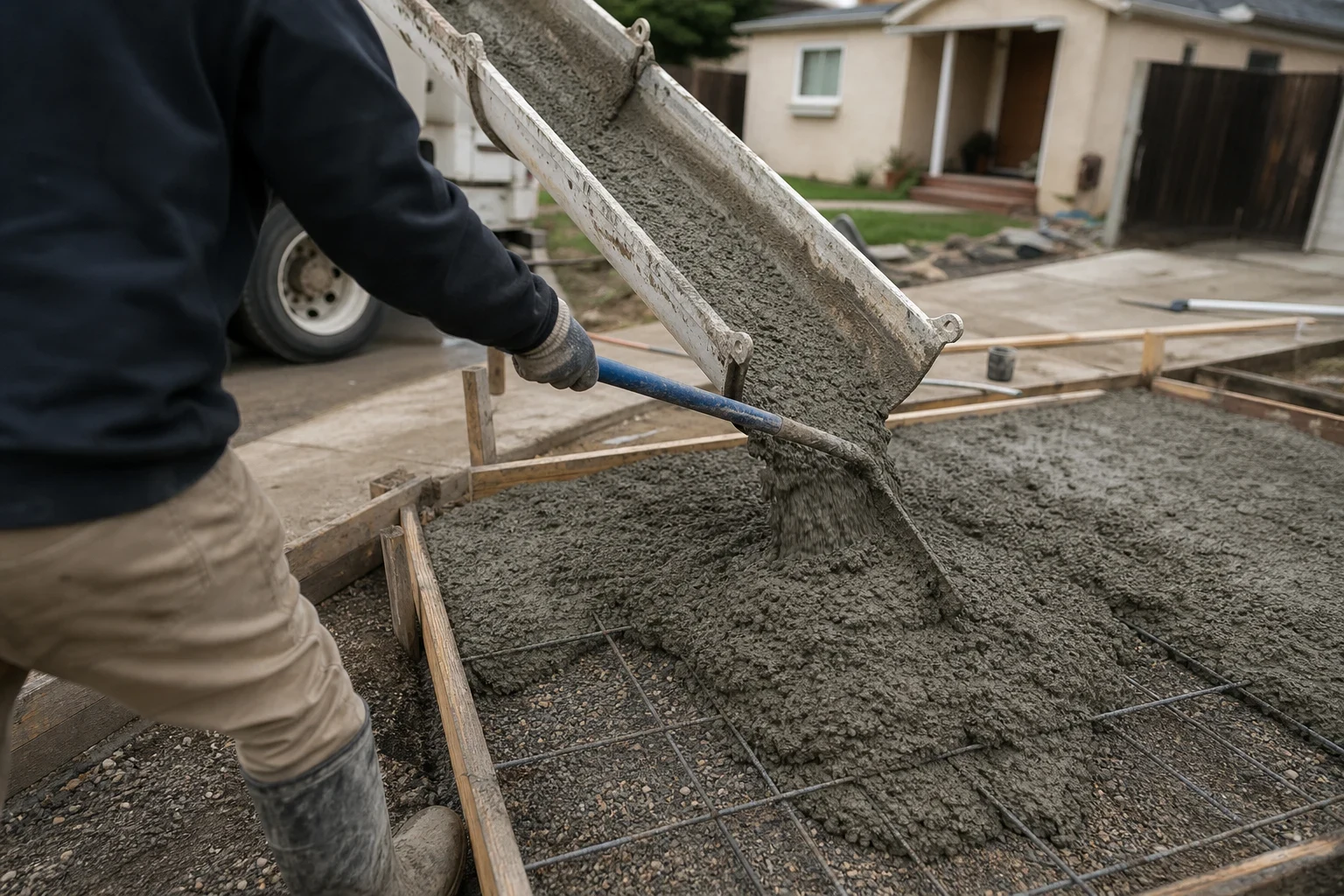
A slab is only as good as what sits under it
Most slab problems start below the surface. Soft fill, thin base rock or no reinforcement lets a slab settle, crack or tip toward the house within a few years. So most of our time on a slab goes into the ground work you never see once the concrete is down.
A slab is the right call when you need a flat, permanent surface in one spot: a pad for a new shed or hot tub, a base for a pergola, a clean area for trash bins or a level place for pool equipment. For a larger outdoor living area, our Patios or Concrete Backyards pages are a better fit.
We have been in business 15+ years and are licensed by the California State License Board (CSLB). Our answer on thickness, reinforcement and finish comes from what the slab will carry, not from what costs more.
What the work includes
- Excavation and grading
- We dig to the right depth for the slab and its base, then grade so the finished surface sheds water away from your home and any nearby structures.
- Compacted base
- Crushed base rock goes down in lifts and is compacted with a plate compactor. The clay soils common around the area swell when wet and shrink when dry, and a proper base keeps that movement from reaching the concrete.
- Forms and reinforcement
- Wood forms set the exact edges and height. Rebar or wire mesh is placed on chairs so it sits in the middle of the slab, where it does its job, instead of lying on the dirt.
- Pour and finish
- We place and screed the concrete, then finish it to suit the use: a light broom finish for grip outdoors, or a smoother trowel finish under a shed or storage area.
- Control joints and curing
- Joints are cut or tooled at planned spacing so any shrinkage cracks follow a straight line. The slab is kept moist while it cures so the surface stays hard and does not dust.
- Cleanup and haul-off
- Excavated soil, form boards and any old concrete leave with us. The work area is swept and rinsed before we go.
Signs it is time for a new slab
Something heavy is on the way
A hot tub filled with water weighs several tons. A shed full of tools is not light either. Pavers or bare ground will sink under that load, so the pad should go in before the delivery does.
The old slab tilts toward the house
If water pools against your foundation after watering or rain, the slab has settled the wrong way. Removing it and pouring new on a properly graded base solves the drainage at the source.
Wide cracks with uneven edges
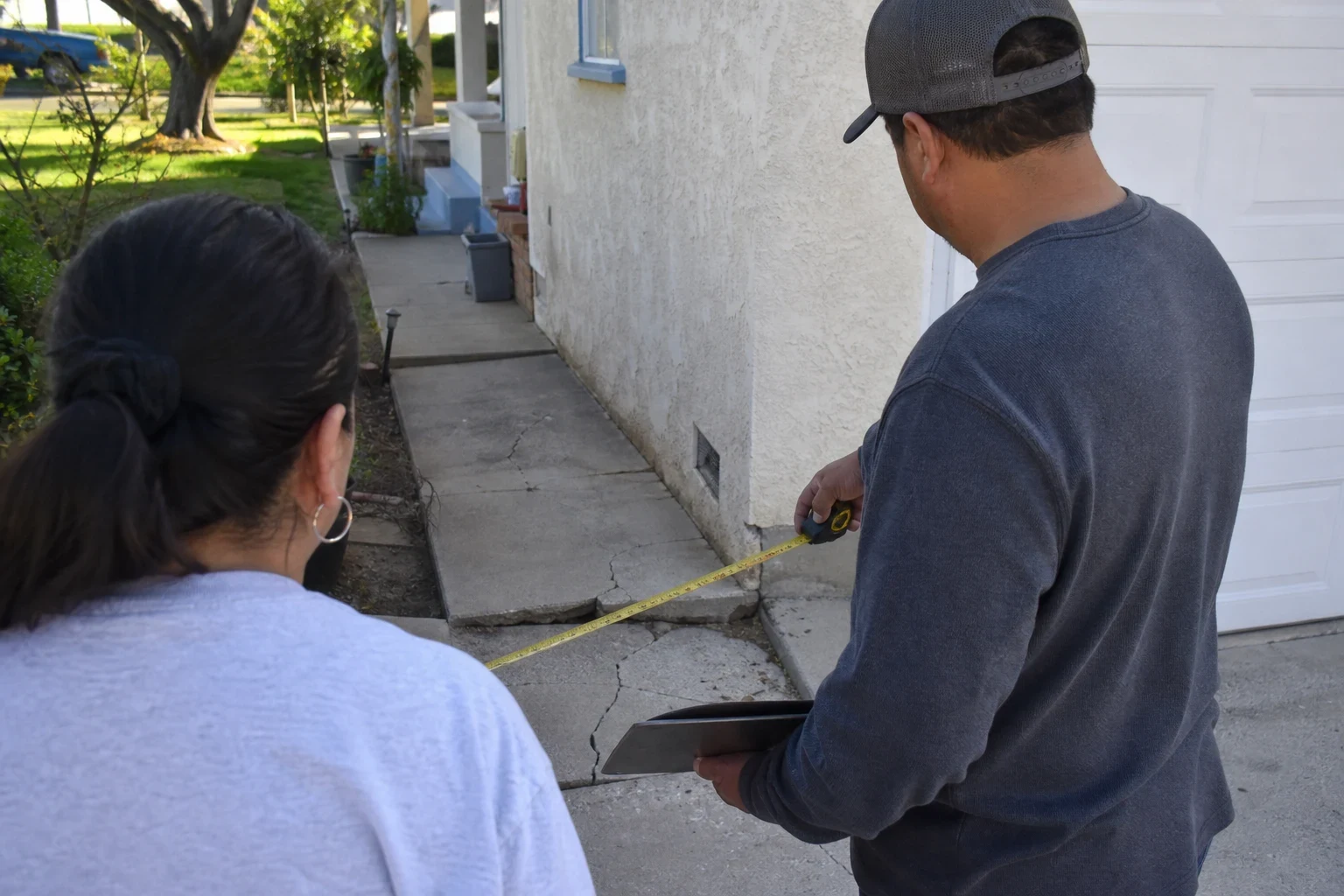
When one side of a crack sits higher than the other, the base underneath has moved. Patching the surface will not hold, and a replacement slab is the honest fix.
A bare patch that turns to mud
Side areas used for bins, bikes or equipment wear down to dirt and stay muddy in winter. A simple slab gives you a clean, level spot that stays put.
What moves the cost of a slab
Slab pricing comes down to a handful of plain factors. We explain each one in the estimate so you can see where the money goes and choose where to adjust.
Size and thickness
Area sets the amount of concrete, but thickness matters too. A 4-inch slab suits light use, while a hot tub or heavy equipment usually calls for 5 or 6 inches.
Access to the spot
An open backyard reached by truck costs less than a narrow side yard where concrete must be wheeled in or pumped over a fence.
Removing what is there
Breaking out and hauling away an old slab, pavers or tree roots adds labor and disposal.
Soil and base depth
Soft or expansive soil may need deeper excavation and more base rock to keep the slab stable.
Finish and permits
A plain broom finish is the simplest. Stamped or colored work, or a slab that needs a permit and inspection, adds time to the job.
How a slab job runs
- 1
Phone call and site visit
We start with a short call about what the slab is for, then visit to measure, check access and look at the soil and drainage.
- 2
Written estimate
You get a line-item estimate covering size, thickness, base, reinforcement, finish and haul-off, with any permit needs noted plainly.
- 3
Prep day
We remove any old concrete, excavate, compact the base, set the forms and place the reinforcement. You can see the layout before anything is poured.
- 4
Pour day
The concrete is placed, leveled, finished and jointed in one visit. Most residential slabs are poured in a few hours.
- 5
Cure and cleanup
Forms come off after the concrete sets, the site is cleaned, and we tell you exactly when the slab can take foot traffic and when it can take its full load.
Concrete slab questions
How thick should my slab be?
For a shed, bins or light storage, 4 inches over a compacted base is usually right. For a hot tub or heavy equipment we pour 5 to 6 inches with heavier reinforcement. We will tell you which one fits and why.
How soon can I use it?
Foot traffic is fine after a day or two. Wait about a week before setting a shed or filling a hot tub. Concrete keeps gaining strength for roughly a month.
Will the slab crack?
Concrete shrinks as it cures, so small hairline cracks can happen. Control joints give that shrinkage a planned place to go, and a solid base keeps the slab from settling or splitting unevenly.
Do I need a permit?
Many simple outdoor slabs do not, but some projects do, depending on size and what will sit on them. We check during the site visit, and when one is needed we pull it and schedule the inspection.
Is the work covered after you finish?
Yes. Your slab comes with a 1-year warranty on our work. If something related to our installation comes up in that time, call us and we will come look at it.
Plan your slab with a clear estimate
Tell us what the slab will hold and where it goes. We will visit, measure and walk you through thickness, base and cost in plain terms. We pour slabs across Long Beach and nearby towns such as Lakewood, Signal Hill and Seal Beach.