ServicesDriveways
Concrete Driveways in Long Beach
A driveway carries your car every day, so the work under the surface matters as much as the finish on top. We tear out tired concrete, rebuild the base and pour a new slab sized and reinforced for how you actually use it.
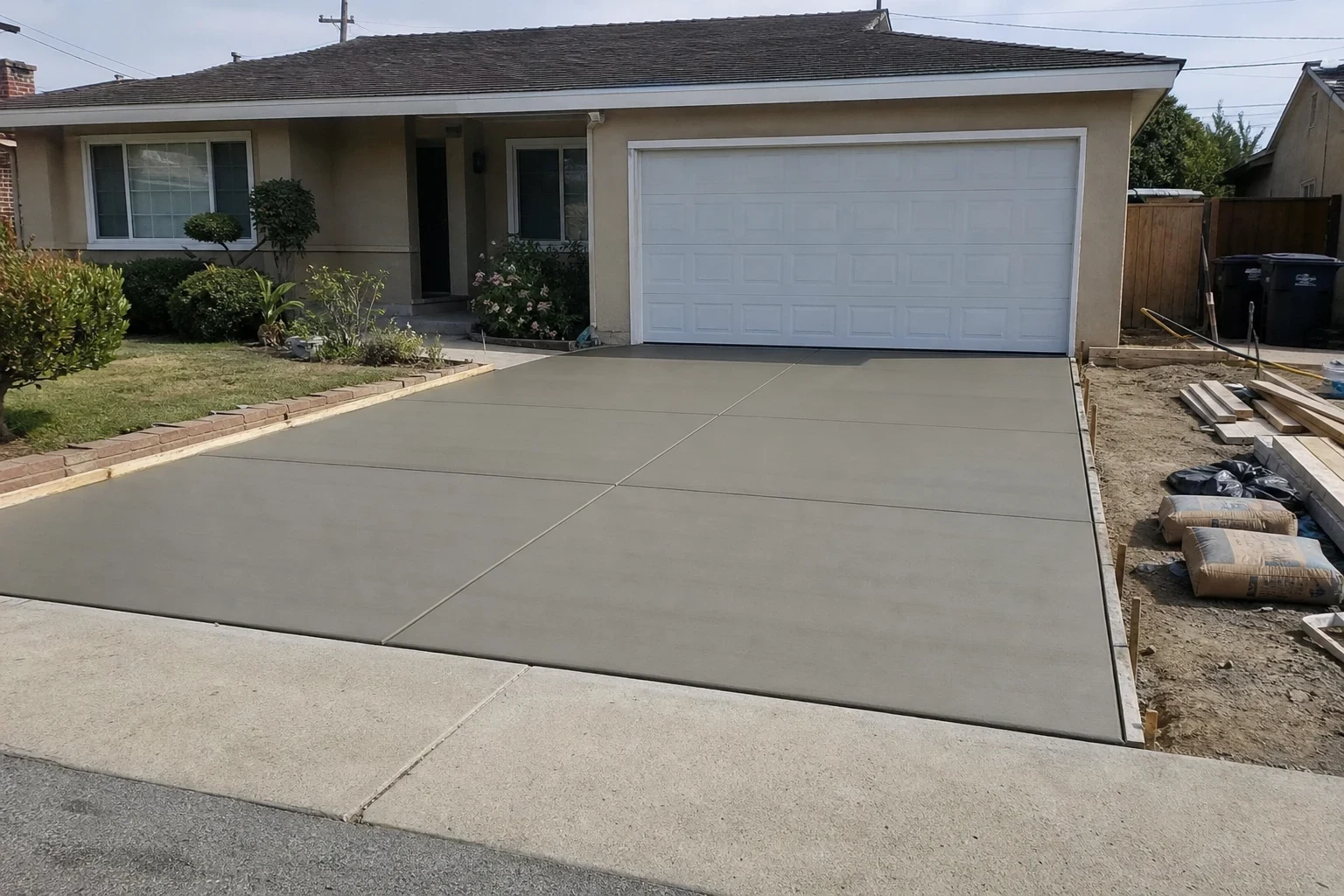
When a new driveway is the right call
Most driveways we replace did not fail at the surface. They failed underneath: a thin or poorly compacted base, no steel, joints spaced too far apart, or tree roots lifting one panel above the next. Once a slab has settled, heaved or broken into pieces, patching only hides the cause for a season or two.
We give you a straight answer about what went wrong and what a new driveway needs to avoid repeating it. Many homes around Long Beach sit on clay soil that swells when wet and shrinks when dry, which is why we pay close attention to base depth and drainage before any concrete arrives.
We have been pouring concrete here for over 15 years, and we are licensed by the California State License Board (CSLB). If you are also thinking about the walk to your front door, our walkways and sidewalks page covers that work.
What a driveway job includes
Demolition and haul-away
We saw-cut clean edges where new concrete meets what stays, break out the old slab and haul the debris off your property.
Base preparation
We excavate to the right depth, remove soft soil and roots, then lay and compact crushed aggregate base. This is the step that decides how long the driveway lasts.
Forms, grade and drainage
Forms are set so water runs away from your garage and foundation, toward the street or a drain, instead of pooling on the slab.
Steel reinforcement
Rebar on chairs, set in the middle of the slab where it does its work, ties the concrete together if the ground moves.
Pour, finish and joints
We place the concrete, finish it to the texture you choose, from a light broom to an exposed aggregate, and cut control joints at proper spacing so any cracking happens in a straight line where it belongs.
Approach and permit work
If the job includes the curb cut or the approach at the street, that portion usually needs a city permit. We pull it and schedule the inspection.
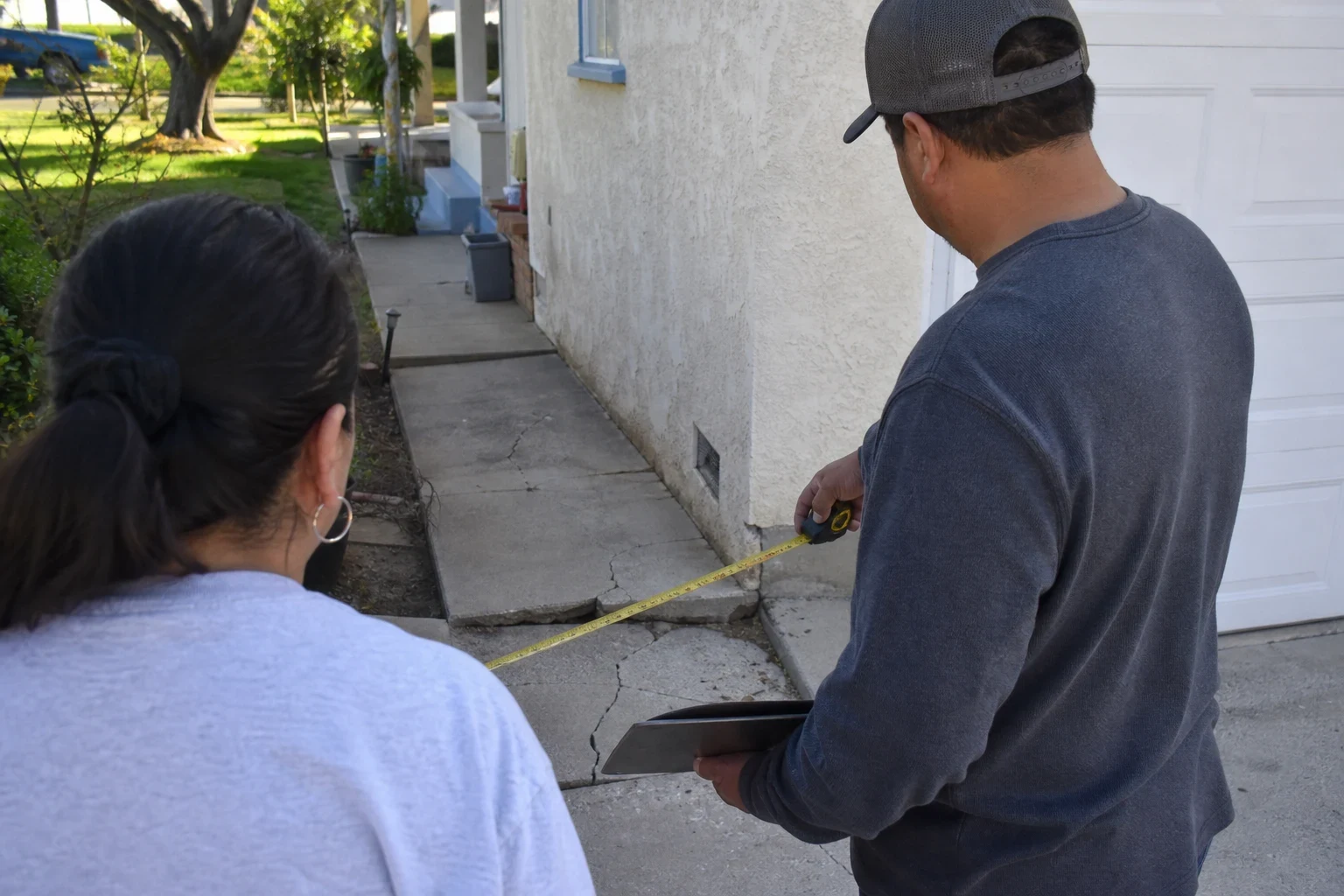
Signs your driveway is ready to be replaced
- Panels at different heights
- One slab sitting higher than the next usually means roots or soil movement underneath. It is a trip hazard and it tends to get worse.
- Cracks that keep widening
- Hairline cracks are normal. Cracks you can fit a coin in, or ones that branch across a panel, point to a base that has given way.
- Water pooling or running toward the house
- A driveway that has settled can send rainwater toward your garage or foundation, which is a bigger problem than the concrete itself.
- Crumbling or flaking surface
- Spalling and loose aggregate mean the top layer is breaking down. Once it starts across large areas, a resurface rarely holds.
- You need more room
- A wider driveway for a second car or a longer pad for a boat is often cleaner as one new pour than as an add-on to old concrete.
How the work runs
- 1
Look and measure
We walk the driveway with you, check the slope, the soil and any root problems, and talk through finish options. You get a written estimate that lists each part of the job.
- 2
Tear-out and base
On the first work day we protect the garage door, lawn edges and planting beds, remove the old concrete and build the new base. Most driveways take one to two days to reach this point.
- 3
Pour day
Steel goes in, the concrete is placed and finished, and joints are cut. We leave the site swept and the forms in place while the slab sets.
- 4
Cure and handover
You can walk on it in a day or so. Keep cars off for about a week so the concrete gains strength before it carries weight. We come back to strip the forms and clean up the edges.
What moves the price of a driveway
A driveway is priced on the work it actually needs, not a per-foot number pulled from the internet. We put every item on the estimate so you can see where the money goes and decide on options before we start.
- Size and thickness
- Square footage drives the concrete and labor. A pad that will carry a truck or trailer may need a thicker slab and more steel.
- What comes out
- Removing a thick old slab, or one with heavy steel in it, takes more time and more hauling than breaking out a thin one.
- Soil and roots
- Soft clay, buried debris or large roots mean more excavation and base material. We tell you what we find before it changes anything.
- Finish
- A broom finish is the most economical. Exposed aggregate, color or stamped concrete add material and finishing time.
- Access and the approach
- Tight access can mean pumping concrete instead of chuting it, and work at the curb adds city permit and inspection steps.
Driveway questions we hear most
- Can you pour new concrete over my old driveway?
- We do not recommend it. A new layer on top inherits every crack and settled spot underneath, and it raises the height at the garage and street. Taking the old slab out lets us fix the base, which is usually the real problem.
- Will my new driveway crack?
- Concrete shrinks as it cures, so some fine cracking is normal. Control joints, good base compaction and steel reinforcement keep that cracking narrow and in the joints rather than across the panels.
- How long until I can park on it?
- Foot traffic is fine after about a day. Give it roughly seven days before driving on it, and longer for heavy trucks or an RV.
- Do you offer a warranty on driveways?
- Yes. Our driveway work comes with a 1-year warranty. We go over what it covers when we give you the estimate.
- Do I need a permit for a new driveway?
- Work on your own property often does not, but changes to the curb cut or the approach in the public right of way generally do. We check what your job requires and handle the permit when one is needed.
Ready to plan a new driveway
Tell us about the driveway you have and the one you want. We will set a time to look at it and walk you through the options and what drives the cost.