ServicesPatios
Concrete Patios in Long Beach
We pour concrete patios that sit level under a table, shed rain away from your home and keep their finish for years. You get a clear explanation of the base, the slope and the finish options before any concrete arrives, plus a written estimate you can read line by line.
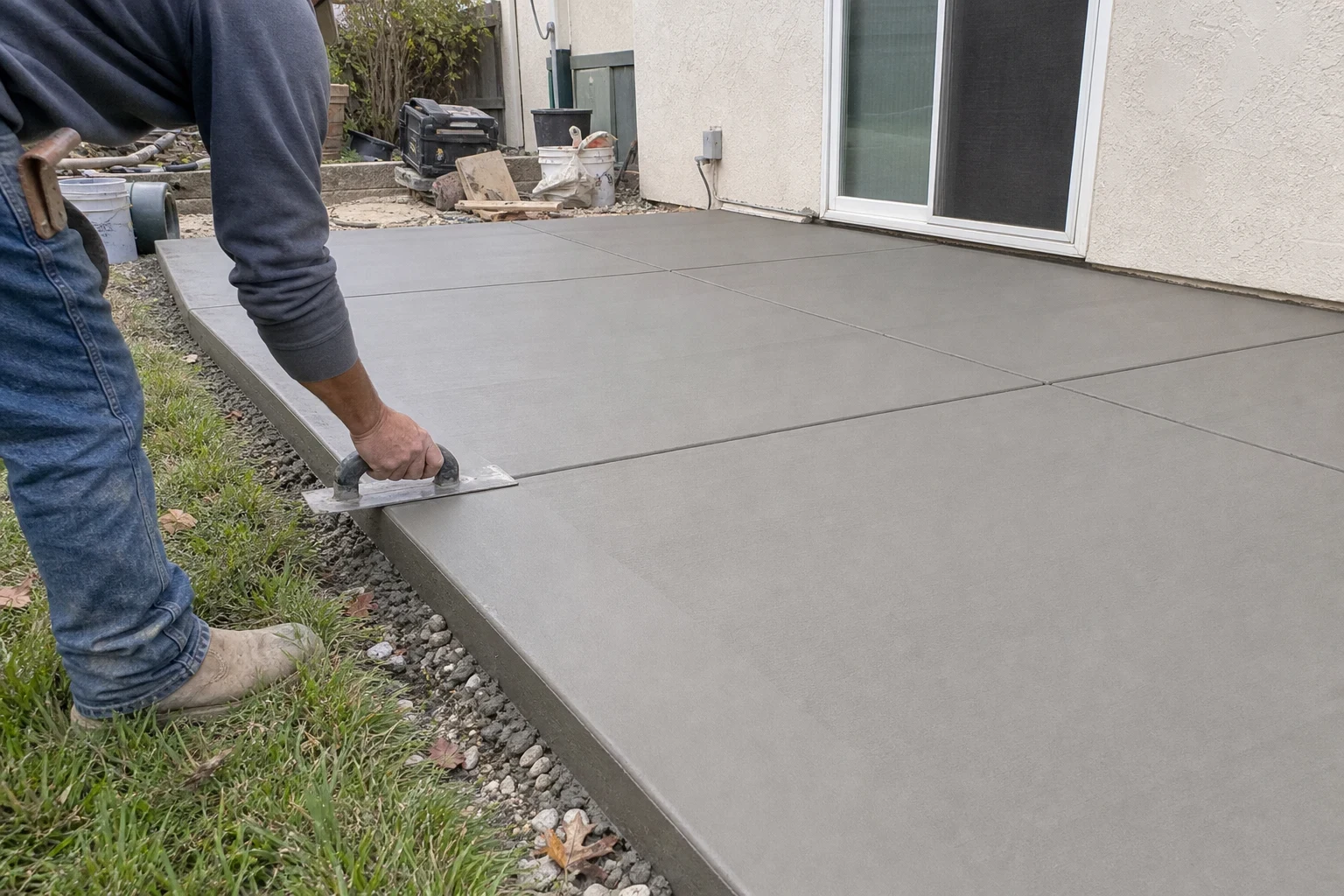
A patio is a slab you live on
It has to stay flat enough for chairs, drain gently away from the house and feel good under bare feet. We build new concrete patios and replace worn ones, from a simple broom-finished pad outside the back door to a larger space with steps, a border band or a decorative surface.
Replacement is usually the right call when the old slab has tipped toward the house, broken into lifted sections or was poured too thin to begin with. We tell you what we see and what each option costs. If stamped concrete or exposed aggregate suits your yard, we bring samples. If a clean broom finish is the better value, we say so.
We have been in business 15+ years and are licensed by the California State License Board (CSLB). That shows up in the parts you never see once the concrete is down: the depth of the base, where the joints go and how the slope is set.
What your patio job includes
Removal of the old surface
We break out existing concrete, pavers or brick and haul the debris away. Lawn and roots come out too, so nothing organic rots under the new slab.
Grading and a compacted base
We excavate to a consistent depth, set base rock and compact it in lifts. Clay soils are common around the area, and a firm base is what keeps a patio from settling unevenly.
Forms set for drainage
Forms are set so the finished surface falls about a quarter inch per foot away from your foundation. Water runs off toward the yard or a drain instead of toward your walls.
Reinforcement and thickness
Most patios are poured around four inches thick with rebar or wire mesh placed in the slab, not left lying on the dirt. Areas that will carry a hot tub or a heavy outdoor kitchen get extra thickness.
The finish you choose
Broom, smooth trowel, exposed aggregate, integral color or a stamped pattern. We seal decorative finishes so color holds and stains wipe up more easily.
Control joints and cleanup
Joints are cut or tooled where concrete naturally wants to crack, so any movement follows a straight line. We clean up the site before we leave.
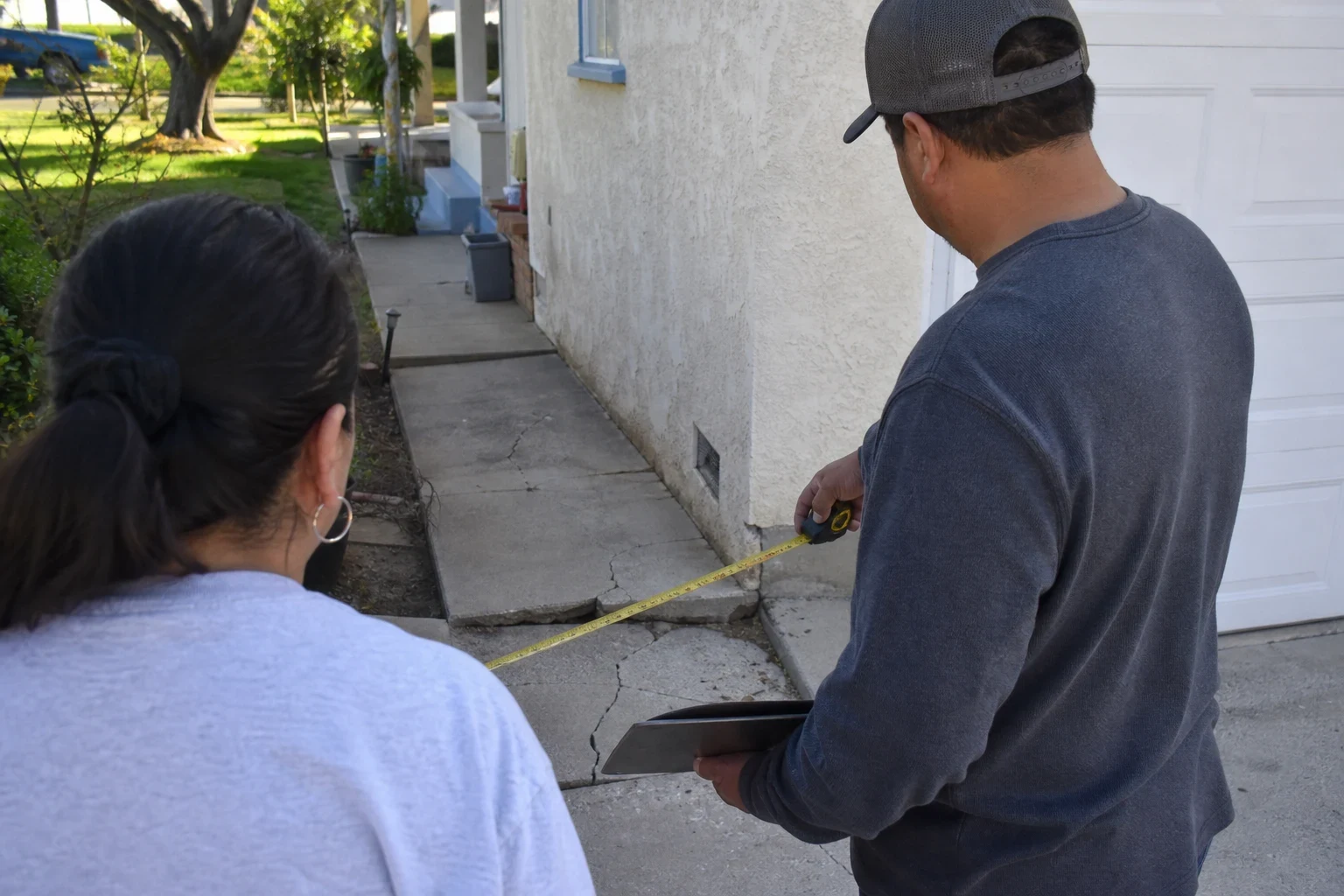
Signs it is time for a new patio
- Water runs toward the house
- If puddles form against the wall or the door threshold after rain or sprinklers, the slab has lost its slope. That is a drainage problem, and it gets worse, not better.
- Sections have sunk or lifted
- Uneven slabs with lips at the joints are trip hazards, especially for kids and older guests. Root pressure and a weak base are the usual causes.
- The surface is flaking
- Scaling and powdery spots mean the top layer was overworked or poorly cured. The damage keeps spreading as the paste wears away.
- Shifting pavers or loose brick
- Older paver and brick patios drift and sprout weeds between units. A concrete slab gives you one continuous, low-maintenance surface.
- The space no longer fits
- A patio sized for a grill and two chairs rarely works for a dining table and a lounge set. Extending or replacing it is often simpler than patching an addition onto an old slab.
How a patio job runs
- 1
Site visit and measurements
We look at the ground, the existing slab, access from the street and where water goes now. Then we talk through size, shape and finish with you.
- 2
Written estimate and layout
You get a line-item estimate covering demolition, base, reinforcement and finish. We mark the outline on the ground so you can see the patio before anything is dug.
- 3
Prep day
Demolition, excavation, base compaction, forms and reinforcement usually happen before the pour. We check the slope with a level across the whole form.
- 4
Pour and finish
Concrete is placed, screeded and finished while it is workable, then joints are cut at the right time. Decorative work like stamping is done on the same pour.
- 5
Curing and handoff
Light foot traffic is usually fine after a day or two, furniture after about a week, and full strength comes at around 28 days. We walk the finished patio with you, and the work is covered by our 1-year warranty.
What moves the price of a patio
Every patio is priced from its own measurements and site. The square footage sets a baseline, but what sits underneath and how we reach the backyard often matter just as much. Your written estimate shows each item separately, so you can see where the money goes.
- Size and shape
- Larger patios cost more in total but often less per square foot. Curves and many corners take more forming time than a simple rectangle.
- Access to the backyard
- A wide gate lets us bring concrete in by wheelbarrow or buggy. A narrow side yard or no rear access can mean a pump truck.
- What comes out first
- Removing thick old concrete, brick on a mortar bed or large roots adds labor and disposal.
- Soil and base needs
- Soft or clay-heavy ground may need deeper excavation and more base rock to keep the slab stable.
- Finish and extras
- Integral color, stamped patterns, exposed aggregate, steps and border bands each add material and finishing time. A broom finish is the most economical.
Patio questions we hear often
- How thick should a concrete patio be?
- For ordinary furniture and foot traffic, about four inches over a compacted base is standard. If you plan a hot tub, a masonry fireplace or an outdoor kitchen, we thicken the slab under that area. We will note the thickness on your estimate.
- Will my new patio crack?
- Concrete shrinks as it cures, and some fine cracking is normal. Control joints, reinforcement and a good base keep cracks in straight, planned lines rather than wandering across the slab. We are upfront about this before you sign anything.
- Do I need a permit for a patio?
- Many simple patio slabs do not need a building permit, but some do, depending on drainage changes, size and whether a cover or structure will be added later. We check the requirements before scheduling and pull the permit when one is needed.
- Can the new patio tie into my existing walkway or steps?
- Yes. We match heights at the transitions so there is no lip, and we can carry the same finish onto new walkways and sidewalks or concrete steps if you are planning those too. Matching the color of older concrete exactly is not always possible, and we will tell you that honestly.
- Is the work warranted?
- Yes. Your patio comes with our 1-year warranty. We explain what it covers when we hand over the finished job.
Ready to plan your patio
Tell us how you want to use the space and what is there now. We will set up a visit, measure, and give you a clear written estimate with the options laid out side by side.