ServicesConcrete Side Yards
Concrete Side Yards in Long Beach
We turn the muddy, weedy strip beside your home into a clean concrete path that drains away from the walls, carries trash bins without rutting and keeps stucco and meters clear. You get a straight answer on slope, drainage and cost before anything is formed.
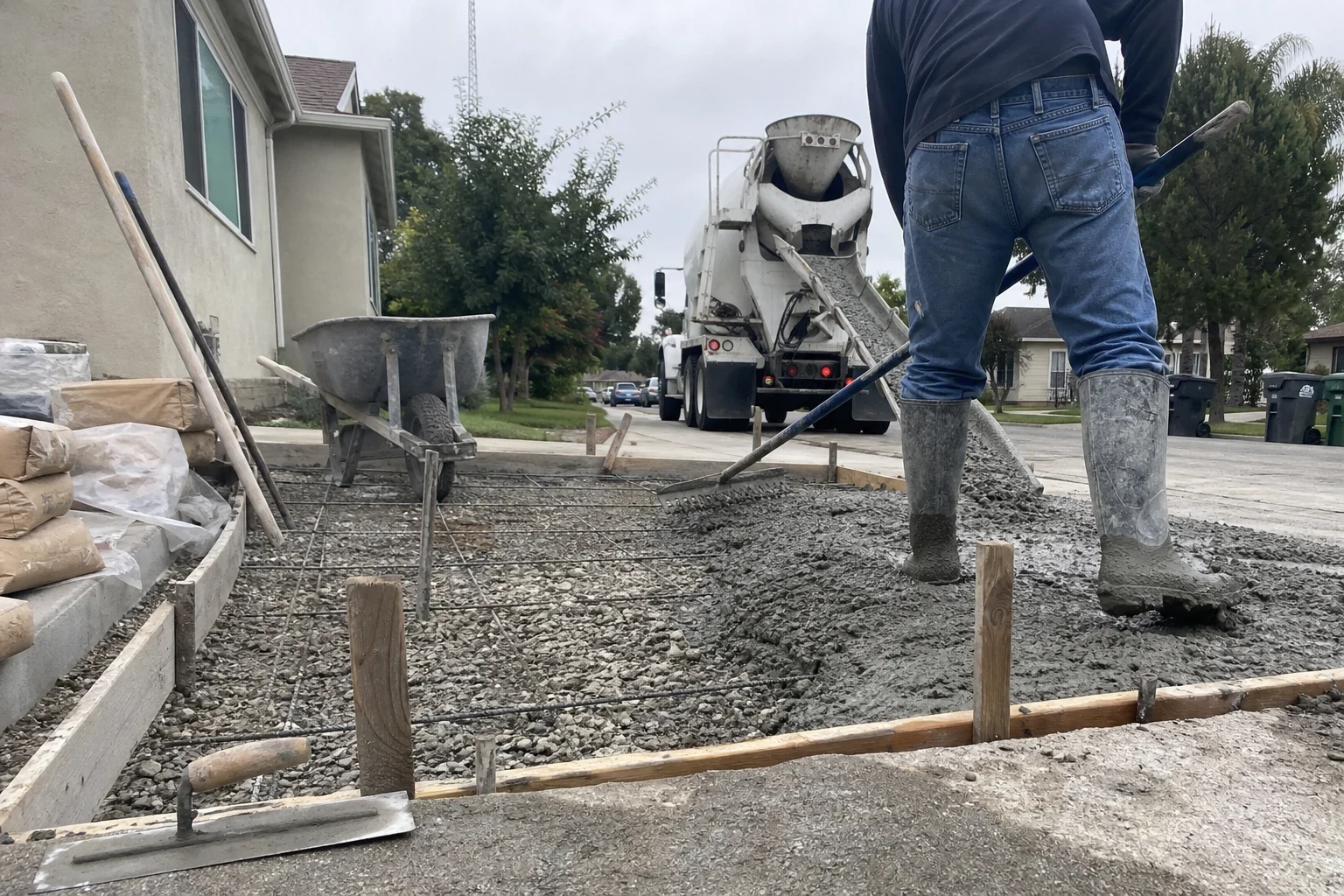
A narrow space that needs careful work
A side yard is usually three to six feet wide, boxed in by a house wall on one side and a fence on the other. That tight space is where water collects, gravel migrates and weeds come back every spring. A properly poured concrete side yard fixes all three, and it gives you a firm route for bins, tools and the gardener's wheelbarrow.
The finished surface looks simple, but the details decide whether it works. The slab has to fall away from your home's foundation, stay below the stucco weep screed, clear the gas and water meters, and send water somewhere useful. We plan those points first, then talk about finish. Most side yards get a fine broom texture for grip, and some owners add a smooth troweled border to frame the path.
What the work includes
Layout and drainage plan
We measure the run, mark where water will go and check how the slab meets the house. Water leaves by sheet flow toward the street, or into an area drain or channel drain where the grade will not allow it.
Excavation and haul-off
Old gravel, pavers, roots and loose soil come out to the depth the slab needs. Spoils leave in the same visit, so nothing sits stacked along your fence.
Compacted base and reinforcement
We place and compact a gravel base, then set rebar or wire mesh on supports so it ends up inside the slab rather than under it. Clay-heavy soil, common across the region, moves with wet winters, and a firm base keeps the concrete steady.
Forming around obstacles
Meters, AC pads, hose bibs, downspouts and gate posts all get planned around. We leave access boxes clear and keep concrete off utility shutoffs.
Pour, finish and joints
Concrete is placed, screeded and finished by hand in the narrow space. Control joints go in at short, even spacing so any shrinkage cracking follows a straight line instead of wandering across the path.
Signs your side yard is ready for concrete
- Standing water after rain
- Puddles against the wall after a winter storm mean the ground is sloped toward your home. That water can reach the foundation and stain the stucco.
- Gravel that keeps disappearing
- Decorative rock sinks into soft soil, spills onto the lawn and makes rolling a trash bin a chore.
- Weeds returning every year
- Landscape fabric breaks down and weeds push through. A slab ends the cycle.
- Soil piled against the stucco
- When dirt or mulch sits above the weep screed, moisture wicks into the wall. Lowering the grade and pouring a slab below it corrects that.
- Old concrete that has heaved or broken up
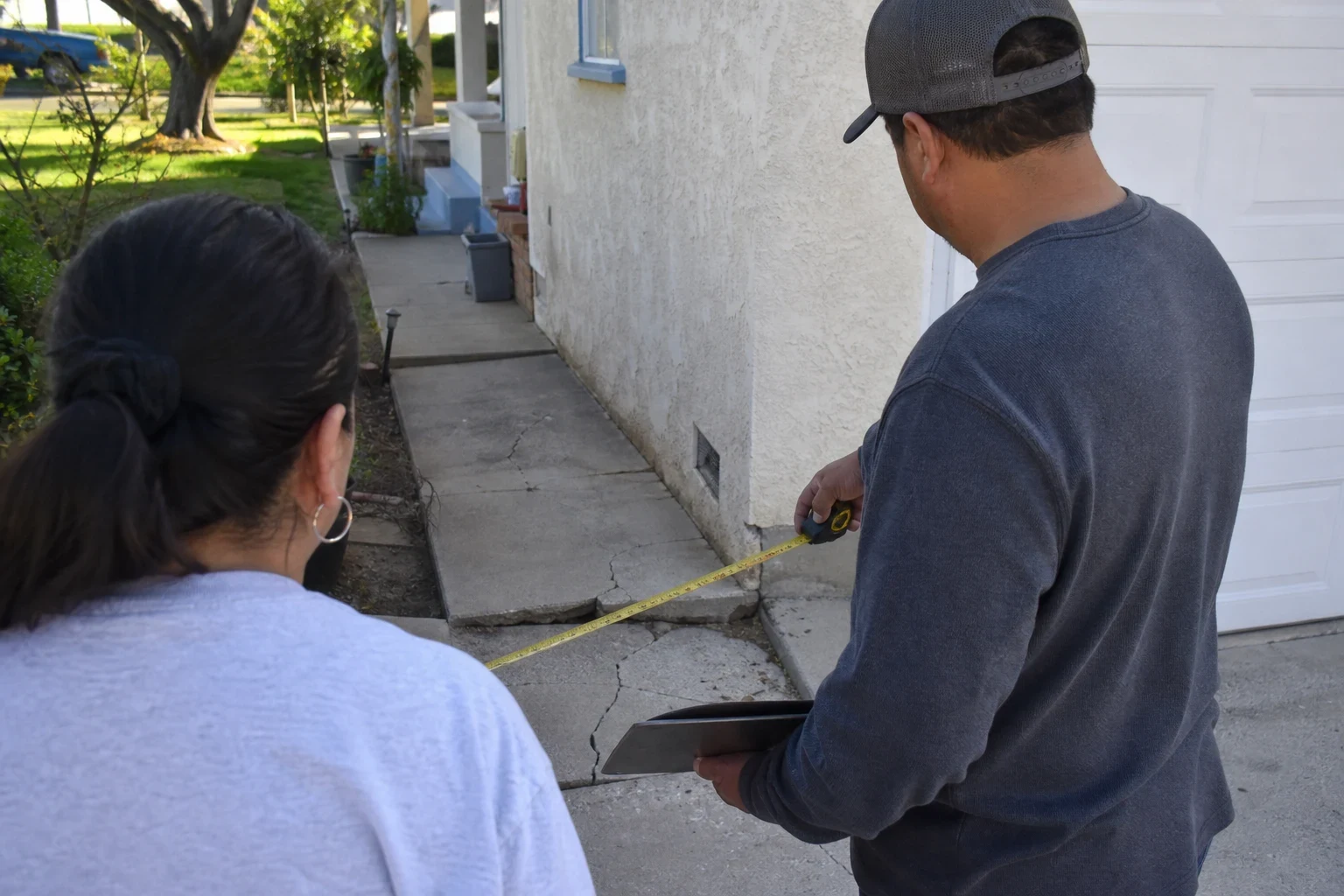
- An old walk that is tilted toward the house or split into loose pieces is usually better removed and replaced than patched. We tell you plainly which one you have.
How a side yard project runs
- 1
Walk the space with you
We look at the slope, the wall, the meters and where water ends up. You hear what is causing the current problem and what a new slab needs to solve it.
- 2
Written estimate
You get a line-by-line estimate covering demolition, base, reinforcement, drainage and finish, so you can see what each part of the cost is for.
- 3
Prep day
We protect the stucco, the fence and nearby plantings, dig out, compact the base and set forms and steel. Narrow access often means the work moves by wheelbarrow, or by a line pump when the run is long.
- 4
Pour and finish
The concrete goes in, gets finished and jointed, and the forms come off once it sets. Foot traffic is fine after about a day, and we let you know when bins and heavier loads can go back.
- 5
Cleanup and walkthrough
We wash down the wall and fence, clear the debris and walk the finished slab with you, checking the fall and the drains together.
What moves the price of a side yard
Side yards are small in square footage but labor-heavy, because everything moves by hand through a gate. These are the items that change your estimate most. We explain each one in writing so there are no surprises later.
- Access
- A wide gate and a short run go faster. A long, narrow path or a yard reached only through the house side adds labor or calls for a pump.
- What comes out first
- Removing old concrete, thick gravel or tree roots takes more time and more haul-off than clearing bare soil.
- Drainage needs
- Flat lots may need an area drain, channel drain or a line run to the street. A yard that already falls toward the street needs less.
- Finish and border
- A standard broom finish is the simplest. Colored concrete, a troweled border or a stamped pattern adds time and material.
- Size and thickness
- Length, width and whether the slab must carry more than foot traffic all affect how much concrete and steel goes in.
Side yard questions we hear often
- Will concrete push water toward my foundation?
- Not when it is poured right. We set the slab to fall away from the wall, usually about a quarter inch per foot, and carry the water to the street or a drain. If your lot is flat, we add a drain rather than guess.
- How close to the stucco can the slab go?
- The concrete must stay below the weep screed at the bottom of the stucco, with a gap so the wall can drain. We check that height before we set the forms, and sometimes that means digging the grade lower than it sits now.
- What happens with my gas and water meters?
- We form around them and leave their access clear. Utility shutoffs and meter boxes stay reachable, and the slab is shaped so water does not pool at them.
- Who stands behind the work once the slab is in?
- We do. Our company is licensed by the California State License Board (CSLB) and has been in business for more than 15 years. Side yard work carries our 1-year warranty.
- Can the side yard match my driveway or patio?
- Usually, yes. We can match a broom texture or color, and the same finish can continue from your driveway or wrap toward a patio or walkways and sidewalks elsewhere on the property.
- How long until we can use it?
- Walking on it is fine after about a day. Wait a few days before rolling heavy loads across, and we will give you a firm date for your slab.
Ready for a side yard that stays dry and clean
Tell us how wide the space is, what is there now and where the water goes. We will explain the options and what drives the cost on your lot.