ServicesStamped Concrete
Stamped Concrete in Long Beach
We pour new concrete and press a pattern and color into it while it is still workable, so it reads like slate, flagstone, brick or wood plank. You get the look of stone with the strength of a reinforced slab, plus straight answers on cost and care.
What stamped concrete is, and when it makes sense
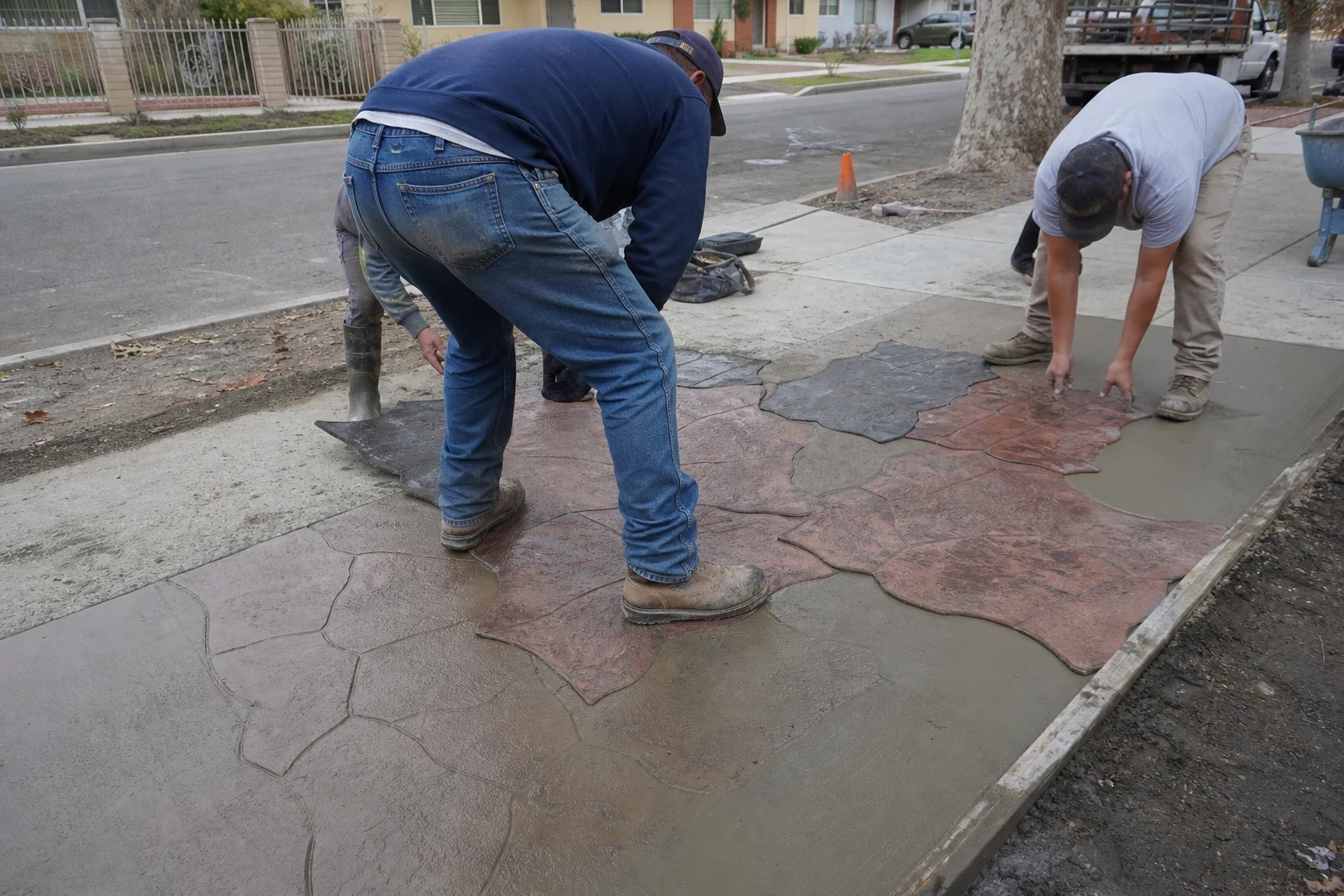
Stamped concrete is a structural slab first and a decorative surface second. We place, level and float the concrete, color it, then press textured mats into the surface during a short working window before it sets. Joints are cut into the pattern's grout lines so they disappear into the design.
It is the right call when you want the look of pavers or natural stone on a patio, driveway, walkway or pool surround, without hundreds of individual pieces that can shift, settle or grow weeds between them. It is a poor fit if you want a surface you can pull up and relay in sections later. We will tell you which way your project leans before you commit.
We have been in business 15+ years, and most of that time has been spent learning how color, texture and sealer hold up under strong coastal sun. Pattern choice matters less than getting the base, timing and sealing right.
What the work includes
- 01
Site prep and compacted base
We remove old concrete or sod, grade for drainage away from your home and compact a gravel base. A stamped finish is only as good as the slab under it.
- 02
Reinforcement and forms
Rebar or wire mesh is set on supports so it sits inside the slab, not on the dirt. Forms are staked to the finished height and slope you approved.
- 03
Color in two layers
We can mix integral color through the whole slab and add a color hardener on top for depth and surface strength. A contrasting release agent in the stamping step leaves darker tones in the grout lines and texture, which is what makes it read as stone.
- 04
Stamping and joint cutting
Mats are laid in sequence and pressed at the right moment, with flexible skins used along edges and walls. Control joints are cut along pattern lines to guide where the slab moves.
- 05
Cleaning and sealing
After curing we wash off residual release agent and apply a sealer. Around pools and steps we add a grit additive to the sealer for better footing when wet.
Questions about Stamped Concrete?
Call(562) 784-5653Signs stamped concrete is the right next step
A plain gray slab that looks tired
If the existing patio or walkway is sound in your view but dated, replacing it with a stamped slab changes the whole yard.
Pavers that keep shifting
Sunken or rocking pavers and weeds in the joints are a sign the system is not holding. A single reinforced slab with a stone pattern avoids that movement.
Old concrete past saving
Wide cracks, heaved sections and broken edges usually mean removal and a new pour. That is a good moment to add pattern and color instead of pouring plain again.
A pool deck that gets slick or hot
Lighter colors stay cooler underfoot, and a textured, sealed surface gives more grip than smooth broom finish.
Planning a larger outdoor project
If you are redoing a backyard or courtyard, stamped borders or a stamped main field can tie it together. See our Concrete Backyards and Concrete Courtyards pages for the bigger picture.
How a stamped concrete job runs
- 1
Walkthrough and samples
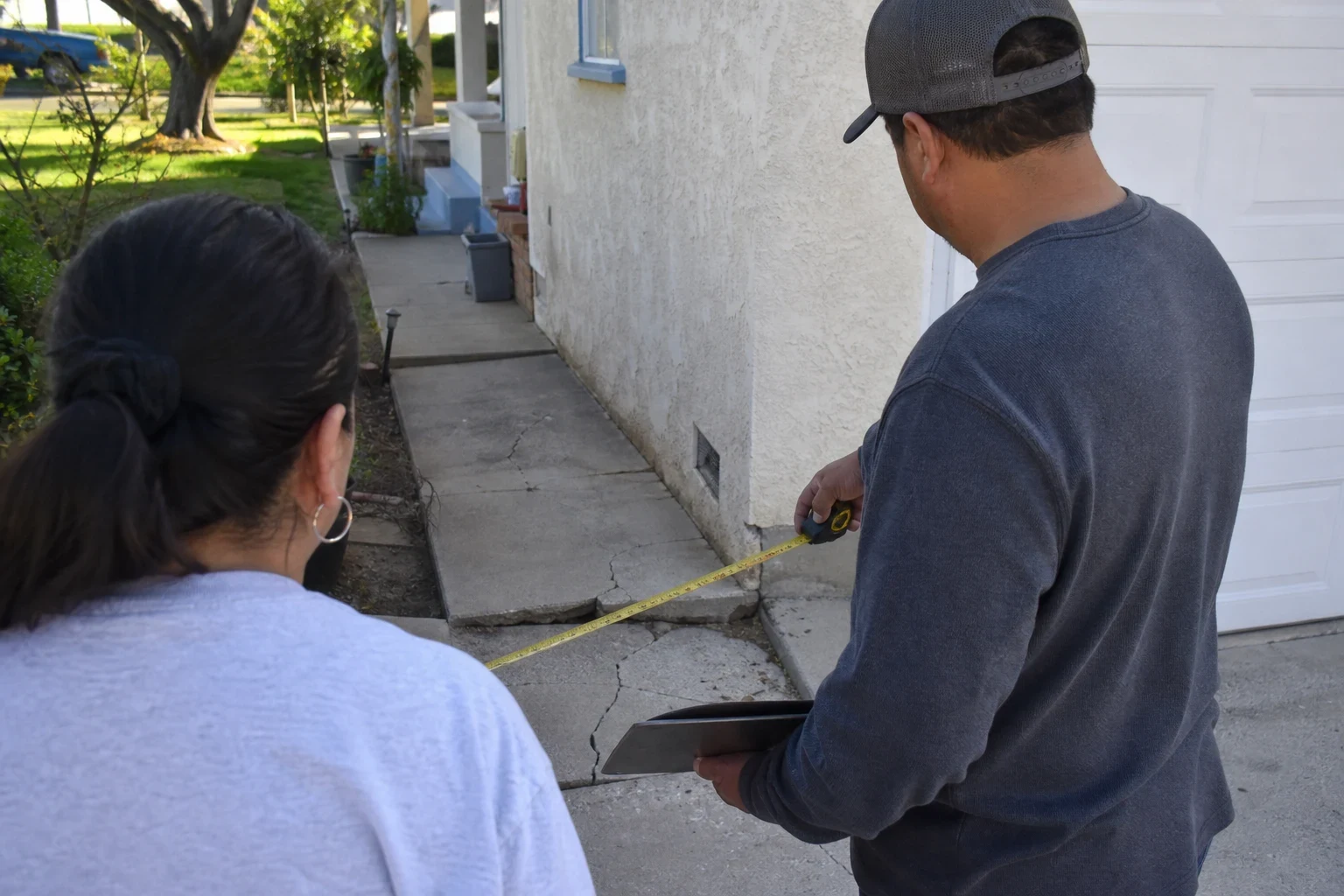
We measure, check drainage and access, and show you pattern and color samples outdoors in real light. You get your quote by phone first, then a written estimate.
- 2
Demo and prep
Removal, grading, base compaction, forms and reinforcement usually take a day or two depending on size. If the work touches a public sidewalk or driveway approach, we pull the city permit.
- 3
Pour and stamp day
This is the day timing matters most. The crew pours, levels, applies color, then stamps across the whole area as the surface firms up. We protect walls, fences and plantings from splatter.
- 4
Cure, cut and seal
Joints are cut within about a day. After the slab cures for several days we clean it and apply sealer, then go over care with you.
What moves the price of stamped concrete
Stamped work costs more than plain concrete because of added color, tooling and labor during a tight working window. The biggest swings come from size, layout and what has to come out first. We explain each line on the estimate so nothing appears later.
- Square footage and shape
- Larger areas spread setup costs further. Curves, tight corners and many edges take more hand detailing.
- Pattern and color choices
- A single color with one pattern is the simplest. Borders, multiple release tones or hand-applied antiquing add time.
- Removal and base work
- Tearing out old concrete, hauling it away and correcting poor drainage or soft soil all add to the job.
- Access to the site
- If a truck can reach the forms, concrete goes straight in. Narrow side yards may need a pump or wheelbarrows.
- Thickness and use
- A driveway carrying vehicles needs a thicker, more heavily reinforced slab than a patio for foot traffic.
Stamped concrete questions
Will stamped concrete crack?
All concrete moves and can develop hairline cracks. Cutting control joints along the pattern lines guides most of that movement into places you will not notice. A compacted base and proper reinforcement reduce the risk further.
Is it slippery when wet?
Sealed stamped concrete can be slick if the sealer is applied without grit. We add a slip-resistant additive around pools, steps and entries, and suggest textured patterns like slate for those areas.
How soon can we use it?
Light foot traffic is usually fine after a day or two. Vehicles should wait about a week to ten days, and the slab keeps gaining strength for about a month.
How often does it need resealing?
Plan on every two to three years for areas in full sun, sooner for driveways with tire traffic. Resealing keeps color rich and protects the surface from stains and chlorine.
What credentials stand behind the work, and is there a warranty?
We are licensed by the California State License Board (CSLB). Our stamped concrete work comes with a 1-year warranty, and we walk you through what it covers before the job starts.
Ready to choose a pattern?
Tell us the area, how you use it and the look you have in mind. We will give you straight answers on options and cost.